Vilnius - miestas, kuriame istorija ir šiuolaikiškumas susilieja, suteikdamas gausybę ką pamatyti ir nuveikti. Kartu su daugybe lankytinų vietų, įspūdžiai iš Cathedral Square pavirsta įtemptu ritualu, kurį kiekvienas aplankytojas gali patirti ir įvykdyti savo norus.
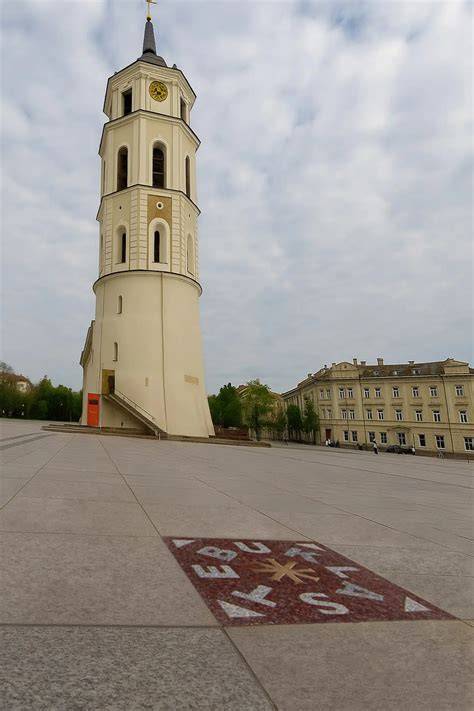
Gintėnas Umbrasas sukurtas plytelė, vadinama „Stebuklas“ (miracle), tapo traukos tašku tiek turistams, tiek vietiniams gyventojams. Plytelė pritraukia dėmesį ir į ją kreipia pasivaikščiotojų, o jos ritualas laikui bėgant išsivystė į „turninį“ ritualą - žmonės sukasi apie ašį, norėdami įgyvendinti norą. Ši plytelė nekalba - ji skleidžia emocijas, kurios miestui suteikia papildomą prasmę.
Stebuklo plytelė Cathedral Square: istorija, ritualai ir vieta
Local superstitions and history swirl around this unassuming tile named "Stebuklas" ("miracle" in Lithuanian), hidden in the vast Cathedral Square plaza. From August 23, 1939 until about 1991, Lithuania was considered a Republic under the Soviet Union, much to the protest of its people.
Many saw the integration of Lithuania into the USSR as a farce, and called it an illegal takeover, a military occupation. Tense relations reigned between the Soviet government and Lithuania for 50 years, until the year 1989. The loudest and the clearest display of dissent, however, was perhaps the quietest and most peaceful. On August 23, 1989, approximately two million people joined hands across Lithuania, Latvia, and Estonia to make the Baltic Way, the longest unbroken human chain in history, spanning over 370 miles. The chain began in Tallinn, Estonia and trailed down through Riga, Latvia and finally ended in Vilnius, Lithuania, right at the stebuklas tile in Cathedral Square.
Stebuklas, therefore, is more than just a miracle tile: it is hallowed ground, a piece of inspirational history. If you do make it to the Cathedral Square in Vilnius, superstition would have you find the tile all on your own, without purposefully looking for it. That part may be more challenging, but once you do find the miracle tile, here's what you do: spin around three times clockwise, jump up and clap once (not totally necessary, but certainly entertaining for those watching you), and make the biggest wish that comes from your heart. You can hear bells ringing every quarter of an hour. Literally, if you learn to understand them, you don't need a watch.
Kaip aplankyti bokštą, katedrą ir plytelę
Can you find spots of exposed bricks? It's possible to visit the tower. Its opening times are from 10 am till 6 pm, and till 7 pm in the summertime. The entrance fee is 5 euro. You can see the bells and have a panoramic view of the old town. Now turn to have a look at the cathedral. This is the first cathedral built in Vilnius, dating from the 13th century and built by King Mindaugas, the founder of Lithuania. This is also when Lithuania was founded as a country. Vilnius cathedral has been rebuilt 7 times, because of fires, floods and wars. I recommend stepping inside for a visit at the end of this track, to see the amazing baroque style chapel of St. Casimir.
Now look down and find the tile with the inscription "Stebuklas'. It means "a miracle' in Lithuanian. To understand this, we should go back to 1989, when Lithuania was still part of the Soviet Union. Residents of all 3 Baltic States connected by hands formed a human chain starting from Vilnius lasting to Riga and finishing in Tallinn. It was called the Baltic Way. Over 2 million people took part in it and it lasted almost 700 kilometres. It was a protest, designed to draw global attention by demonstrating a popular desire for independence. It was held on the 50th anniversary of the Ribbentrop -Molotov pact when Europe got divided by Hitler and Stalin. Lithuania finally proclaimed the restoration of our independence in 1990 on 11th of March. The city has a tradition, if you step on a tile, make a wish, turn around three times and it will come true, just as the desire for independence for all three Baltic states also came true. I'll shortly give you a chance to make your own wish, but before you do, if you plan on visiting either the bell tower or the cathedral or both, then you can close off the tour. Otherwise, if you prefer to keep moving, make your wish then head over to the statue now.
Istorijos ir tikėjimo jėga: Baltic Way ir Lietuvos kelias į nepriklausomybę
On August 23, 1989, approximately two million people joined hands across Lithuania, Latvia, and Estonia to make the Baltic Way, the longest unbroken human chain in history, spanning over 370 miles. The chain began in Tallinn, Estonia and trailed down through Riga, Latvia and finally ended in Vilnius, Lithuania, right at the stebuklas tile in Cathedral Square. The stebuklas, therefore, is more than just a miracle tile: it is hallowed ground, a piece of inspirational history.
Ką daryti prie Stebuklo plytelės
If you do make it to the Cathedral Square in Vilnius, superstition would have you find the tile all on your own, without purposefully looking for it. That part may be more challenging, but once you do find the miracle tile, here's what you do: spin around three times clockwise, jump up and clap once (not totally necessary, but certainly entertaining for those watching you), and make the biggest wish that comes from your heart.
Vienintelis ritualinio ūkininkavimo vadovas, kurio jums kada nors prireiks (12.0.5)
tags: #vilniaus #miesto #lankytinos #vietos #plytele #stebuklas