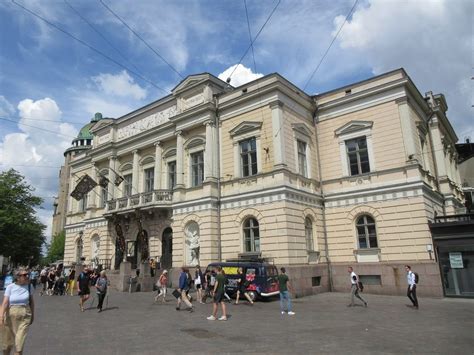
Hotelli rakennettiin 1880-luvulla maanomistajien arkkitehtien, kreivi Tadeusz Rostworowskin ir Alexander Lubańskin, suunnitelman mukaan. Sen pinta-ala on 4 000 neliömetriä. Rakennus ei ollut suunnitltu pelkästään hotelliksi, vaan siinä oli 35 asuinhuonetta. Hotellin ensimmäiseen kerrokseen perustettiin ravintola ja kolmanteen ja neljänteeseen kerroksiin tapahtumasali konsertteja, esityksiä ja juhlia varten.
Jogaila-kadun lähellä sijaitsevassa rakennuksen rungossa oli vuokra-asuntoja, joissa oli tilavat käytävät ja olohuoneet. Rakennuksen arkkitehti T. Rostworowski myi hotellin kaksi vuotta myöhemmin maanomistaja Ignac Zawistowskille, joka myi sen 1920-luvulla Marija Balińskalle, Jašiūnain maanomistajan, historioitsija Michał Balińskin pojanpojan vaimolle, ja vuonna 1929 se meni hänen tyttärelleen Anna Pereświ-Sołtanowalle.
Ennen toista maailmansotaa George-hotellissa oli 95 huonetta ja pohjakerroksessa 600 neliömetrin ravintola, kukkakauppa, kampaamo ja apteekki. Nelikerroksisessa hotellissa on pohjoinen (pää) ja itäinen rakennus. Katolle on pystytetty vuonna 1895 veistos Pyhästä Yrjöstä, joka surmaa lohikäärmeen. Veistos purettiin vuonna 1944 ja kuvanveistäjä Kęstutis Balčiūnas restauroi sen vuonna 2005. Veistos on hieman alkuperäistä korkeampi, painaa 1 200 kg, on valmistettu ruostumattomasta teräksestä valmistettusta rungosta ja päällystetty materiaalilla, josta valmistetaan liitimiä. Vuoteen 1940 asti sitä kutsuttiin nimellä Jurgios eli Žoržas (”Pyhä Yröö”) -hotelli. Pyhä Yrjö on Liettuan toinen suojeluspyhimys Pyhän Kasimirin jälkeen. Lisäksi Pyhän Yrjön kirkko on seissyt tässä kaupunginosassa 1500-luvun alusta lähtien. Pyhän Yrjön markkinoita on pidetty katedraalissa ja Lukiškėsin aukiolla 1830-luvulta lähtien.
Vuoden 1919 alkupuoliskolla hotellissa asui Vincas Mickevičius-Kapsukas, Neuvostoliiton Liettuan hallituksen ja 27. helmikuuta 1919 alkaen Neuvostoliiton Liettuan ja Valko-Venäjän hallitusten johtaja. Kapsukasin johtama ulkomaisten tavaroiden komissariaatti sijaitsi täällä. Puolan armeijan vallattua Vilnan 21. huhtikuuta 1919 Kapsukasin johtama Neuvostoliiton hallitus vetäytyi Minskiin.1920- ja 1930-luvuilla hotelli ei enää vastannut eliitin tarpeita. Vain muutamissa sen huoneissa oli kylpyamme, eikä kaikissa huoneissa ollut lämmintä vettä. Mafiapomo Georgi Dekanidze yksityisti hotellin vuonna 1992.
hyvin laiska artikkeli. Missä ovat valokuvat, piirustukset ja muut mielenkiintoiset asiat? "Vuonna 1992 mafiapomo Georgi Dekanidze yksityisti hotellin. Se, että vuonna 1939 tässä rakennuksessa (huoneessa, jonka parvekkeelta oli näkymä kadulle) sijaitsi Liettuan tasavallan pääkonsulaatti, joka myönsi viisumeita puolalaisille ja juutalaisille, jotka Sugihara myöhemmin pelasti Kaunasissa, ei sanaakaan? Uutisia internetistä Suositellut videot.
In 1832 Prince von Metternich instructed the merely 16-year-old apprentice Franz Sacher to create a dessert for his discerning guests. The sweet and sumptuous masterpiece was to be made with chocolate, apricot jam, and whipped cream, which became the tasty triad comprising the basis of the recipe for success that would become the Original Sacher-Torte. Today, the Original Sacher-Torte stands out as one of Vienna’s cultural and culinary crowning symbols. Eduard Sacher, son of the prodigious patissier Franz, opens an exclusive luxury hotel in the heart of Vienna proudly bearing the family name, Sacher. Eduard Sacher dies, leaving the establishment to his wife, who officially and wholeheartedly assumes responsibility for its fate. Anna Sacher’s management style is strict but fair, injecting a dose of tough love into the family recipe. The end of the monarchy and the cultural upheaval of the inter-war years also mark a turning point and years of change for the select meeting place of Vienna’s most prominent figures from the worlds of politics, business, and art. Anna Sacher dies in her room at the hotel that had become her life. After the war, the Sacher falls first into Russian, then into British, hands. The Gürtler and Siller families only regain control over the hotel six years later. The Hotel Sacher is expanded. Anna Siller dies. Hans Gürtler dies. His son Rolf takes over the business but tragically dies in an accident only a few, short months later. Peter Gürtler dies. The hotel becomes the property of his children, Alexandra and Georg. Their mother, Elisabeth Gürtler, takes over management of the hotel on behalf of her children, who are still minors at the time. The Vienna hotel receives a modernizing makeover. For the first time in its longstanding history, the Hotel Sacher is closed for 10 weeks, as public areas such as the entrance area, concierge desk, lobby, and front desk are renovated. The attic floor is converted, enlarging the hotel by an additional 52 rooms. Furthermore, a new era began for Sacher this year. With the launch of our Sacher Online Shop, the world-famous Original Sacher-Torte and our exclusive delicacies are now available far beyond the walls of our historic cafés. The Original Sacher-Torte has long been an export success. Approximately 360,000 hand-made cakes are shipped to all corners of the globe each year. Building on this success, the Sacher Artists’ Collection is launched in 2008. Each year, a different artist transforms the wooden box of the Original Sacher-Torte, creating limited editions for a good cause. Renowned Austrian artists like Hermann Nitsch, Gustav Peichl a.k.a. In February, the Hotel Sacher Wien presents its new “look” after several years of refurbishment: all in all, 86 rooms and 63 suites on six floors were brought up to the latest standards. The next generation is brought in to assume responsibility for the performance of the business. The initiation of the Sacher School of Excellence offering all Sacher employees, from apprentices to managers, comprehensive education and training. Redesign of various rooms, restaurants & cafés. Hotel Sacher Vienna celebrates its 150th anniversary. von Schwarz built an impressive hotel between 1863 and 1866 called the Österreichischer Hof. Already during the first years, its guests included members of royal families, statesmen, members of the high clergy as well as many artists. the Österreichischer Hof immediately became its social centre. living side by side with the European and overseas high society. In 1988, the Gürtler family bought the famous hotel, thus starting a new era. All the rooms and restaurants were renovated with a great deal of regard for their historical heritage. The rooms and suites were adorned with unique works of art while special attention was given to the colour of the interiors.
tags: #zachevo #viesbutis #paskutinio #suvedziojimo #istorija