Pranešime pateikiama gili Rumelių (Rumeli) regiono Turkų tapatybės ir migracijos istorija, apimanti laikotarpį nuo ankstyvųjų osmanų veiklos Balkanų pusiasalyje iki modernių laikų pokyčių. Straipsnyje laikomasi tik čia pateikto turinio, neįtraukiant papildomų faktų ar išvadų.
Rumelių kilmės ir migracijos kilmės šaltiniai
Most Turks of Rumelian origin claim that their ancestry could be traced back to the Central Anatolian province of Konya. The city was an important center under the Seljuk Empire in the Middle Ages and was home to a large Turkish population at a time when residing near the central power was a source of security and privilege for people. The existence of a Turkish population in Rumelia, however, goes back long before the Ottoman conquests. The Ottomans set foot in Rumelia during the reign of Orhan Ghazi, the second sultan of the Ottomans. However, settlement in Rumelia began later in the times of Sultan Murad I, the third sultan. The Ottomans discovered numerous empty villages with endless empty fields. Contrary to some popular beliefs, the Ottomans did not send the local population on exile or exterminate them. Turks from Konya, Kastamonu, Balıkesir, Manisa, Aydın and other provinces were then brought in and resettled in these new lands.

Žemės nuosavybė ir privilegijos, įkeliant Turkus į Rumeliją
All these provinces were once the centers of Turkic beyliks, hence, highly populated. Turks relocated in the Balkans were provided with lands and certain privileges were granted as well, by means of which, those, not willing to settle in the newly acquired lands were convinced. The stream of the Turkish populace migrating to Rumelia did not solely come from Anatolia. A great number of people also came from the northern Black Sea region. For instance, Sultan Bayezid I relocated Crimean Tatars in Dobruja, which he had taken from the Bulgarians. Following Tamerlane's Anatolian invasion, more than 100,000 Kipchak Turks, traveled through Romania then Danube and settled in the Edirne, Plovdiv and Pazardzhik provinces. The Turks living in northern Bulgaria today are the descendants of those people. Nearly a million Turks settled in Rumelia over the course of a century and the population spread all over the region.
Rumelių kultūra, religija ir demografiniai pokyčiai
Over time, Rumelia became one of the most prosperous regions of the Ottoman Empire while its people became known as intellectuals, decent, and religious subjects and were generally regarded to be among the most cultivated. They were accompanied by men of religion and dervishes. Villages and towns were established around the axis of mosques, madrasahs and dervish lodges. The higher qualifications of these new residents raised the interest among locals of Rumelia, leading many of them to convert to Islam. A great number of Bulgarians, Macedonians, Croatians, Albanians and Greeks are known to have converted to Islam around that period. Muslim Croatians were called Bosnians while Muslim Bulgarians were called Pomak, Muslim Macedonians were called Torbesh and Muslim Greeks were called Patriot.
Gyventojų kilmės statusas ir "Evlad-ı Fatihan"
A great portion of Rumelian Turks were partly nomads before they settled down. They resided in villages in winter time and hiked to highlands with their herds of sheep in summer. However, by the 17th century, they pretty much adopted a sedentary life. The Ottomans formed military troops of 24 men each from these communities. "Yörük Hakimi," (Nomad Governor) whose rank equaled that of a vizier was assigned as the head of these troops. They were exempted from paying taxes for their services. "Evlad-ı Fatihan" only participated in military campaigns in Rumelia at first. However, toward the end of the 18th century, they began to participate in eastern campaigns as well and the same troops were also used in tracking down bandits in 19th century. Eventually, the term "Evlad-ı Fatihan," began to be used for all Turks residing in Rumelia.
Rumelių išlikimas ir konfliktai
The once thriving Turkish population in Rumelia shrunk following a series of wars and confrontations, including, the Greek Revolution in 1821, the Russo-Turkish War in 1877, the Balkan Wars in 1913 and the 1924 Greek-Turkish population exchange as well as pressure from the Bulgarian resistance movement. Although not all Turks living in Rumelia had the "Evlad-ı Fâtihan" status, they were still called as such in Anatolia, just as a reminder of an age gone by.
Rumelių teritorijos administravimas ir svarbiausi miestai
Rumelia comprises the Ottoman lands in the Balkans, notably Thrace, Macedonia and much of Moesia-covering most of present-day Bulgaria, North Macedonia, Western Thrace in Greece, and the Turkish part of Eastern Thrace. It was bounded to the north by the Sava and Danube, to the west by the Adriatic, and to the south by the Morea. Following the administrative reorganization made by the Ottoman government between 1870 and 1875, the name Rumelia ceased to correspond to any political division. In Turkey, the word Trakya (Thrace) has now mostly replaced Rumeli (Rumelia) to refer to the part of Turkey that is in Europe (the provinces of Edirne, Kırklareli, Tekirdağ, the northern part of Çanakkale Province and the western part of Istanbul Province). However, "Rumelia" remains in use in historical contexts and is still used in the context of the culture of the current Turkish populations within the Southeastern Europe and the descendants of Turkish immigrants from the Southeastern Europe. The region in Turkey is also referred to as Eastern Thrace, or Turkish Thrace. In Greece, the term Ρούμελη (Rumeli) has been used since Ottoman times to refer to Central Greece, especially when it is juxtaposed with the Peloponnese or Morea.
Devşirme ir kultūriniai ryšiai Rumelijoje
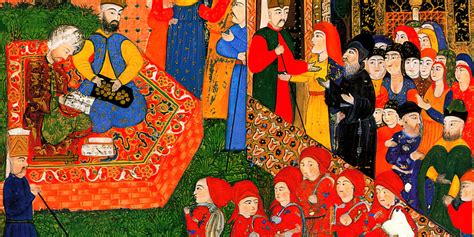
At one point, the museum references the devşirme system, by which the best, brightest and most physically fit of Christian youths in the Balkans were taken from their families by force and brought to the Ottoman court in Istanbul, schooled in Islam and trained for administrative functions in the empire. Rumelia, the former Ottoman possessions in the Balkans.
Sanitariniai ir kultūriniai regiono paveldo bruožai
The name means “land of the Romans”-i.e., Byzantines. The Turks first began to make conquests in the Balkans in the mid-14th century. The land was divided into fiefs of various size that were administered by cavalry officers; local notables who converted to Islām also shared in the administration. The administrative configuration of Rumelia changed frequently until 1864, when the unit of administrative division became defined as the province, or vilayet, which was in turn divided into sancak (subprovinces). The Danube vilayet was formed first, in 1864, followed by those of Janina (Ioannina) and Salonika (Thessaloníki, in Greece) in 1867. Under the Treaty of Berlin (1878), the Danube vilayet formed the independent state of Bulgaria under Ottoman suzerainty; southern Bulgaria formed the autonomous province of Eastern Rumelia with its capital at Philippopoli (Plovdiv); and western Rumelia was divided into the Edirne, Salonika, and Monastir ils (provinces).

Kultūrinė įtaka Rumelijoje
Islāmic mystic brotherhoods found large followings in Bulgaria, Albania, and Bosnia-Herzegovina. This article is about the entire historical region. Rumelia (Ottoman Turkish: روم إيلي, romanized: Rum İli, lit. 'Land of the Romans'; Turkish: Rumeli; Greek: Ρωμυλία) was a historical region in Southeastern Europe that was administered by the Ottoman Empire, roughly corresponding to the Balkans. In its wider sense, it was used to refer to all Ottoman possessions and vassals in Europe. In this context, Rûm means "Romans" and ėli means "land", hence Rumelia (Ottoman Turkish: رومېلي, romanized: Rūm-ėli) literally means “Land of the Romans” in Ottoman Turkish. The term referred to territories of the Ottoman Empire in Europe that had formerly belonged to the Byzantine Empire (the empire known to its own rulers and subjects as the Roman Empire), whose citizens styled themselves Rhomaioi ("Romans"). In medieval Islamic and Ottoman usage, Rûm denoted the lands and peoples of the Roman Empire centred on Constantinople, not the medieval Latin West. The Seljuks called Anatolia "the land of Rûm" after its gradual conquest from Byzantium following the Battle of Manzikert (1071). With the Ottoman expansion across Anatolia and into the Balkans, and especially after the fall of Constantinople in 1453, Rumeli came to apply primarily to the empire’s European provinces in the Balkans.
Santraukos apie Rumelių regioną
The region in Turkey is also referred to as Eastern Thrace, or Turkish Thrace. In Greece, the term Ρούμελη (Rumeli) has been used since Ottoman times to refer to Central Greece, especially when it is juxtaposed with the Peloponnese or Morea.