Gdańsk Lech Wałęsa AirportPort Lotniczy Gdańsk im. Gdańsk Lecha Wałęsy (Polish: Port Lotniczy Gdańsk im. Lecha Wałęsy, formerly Polish: Port Lotniczy Gdańsk-Rębiechowo) (IATA: GDN, ICAO: EPGD) is an international airport located 12 km (7.5 mi) northwest of Gdańsk, Poland, not far from the city centres of the Tricity metropolitan area: Gdańsk (12 km), Sopot (10 km) ir Gdynia (23 km).
Istorija ir vardas
Since 2004, the airport has been named after Lech Wałęsa, the president of Poland from 1990 to 1995. The first passenger flights in Gdańsk were operated in the year 1919 from an airfield in the Langfuhr district of the Free City of Danzig (now Wrzeszcz district of Gdańsk). In the next years, the airport continued acquisitions of further areas which allowed it to expand and invest in modern infrastructure. The first Polish route was served between Gdańsk, Warsaw and Lviv by Aerolloyd beginning in September 1922.
The airport facilities became outdated at the end of the 1960s, prompting a relocation near the village of Rębiechowo. After the closure of the old airport, the new one opened in 1974 near Rębiechowo. The airport acquired its current name in 2004.
Struktūra ir valdymas
Since 1993, Gdańsk Airport has been owned 31.45% by the authorities of Pomeranian Voivodeship, 29.45% by the city of Gdańsk, 1.14% by the city of Gdynia, 0.35% by the city of Sopot and 37.61% by Polish Airports State Enterprise. In 2006, the airport served for the first time more than 1 million passengers per year.
Oro uosto infrastruktūra
Gdańsk Lech Wałęsa Airport has a single asphalt-concrete runway in the direction of 11/29. The runway is 2,800 m (9,200 ft) long and equipped with a modern ILS CAT IIIb allowing aircraft to land in foggy weather. The lighting of the runway can be remotely controlled from the flight control tower. The runway has eight exit taxiways leading to five parking aprons where up to 18 middle-sized aircraft can be parked. The airport also has an extra apron used in winter for de-icing of aircraft.
Terminal T1 was inaugurated in 1997 and has primarily served passengers flying to countries outside the Schengen Area in recent years. The facility covers an area of 9,662 square meters. The first part of passenger terminal T2 was constructed in 2012, ahead of the UEFA European Football Championship held in Poland and Ukraine. At that time, Terminal T2 had a usable area of 39,433 square metres, catering mainly to departing passengers to Schengen countries. The new terminal was built to the west of the existing terminal T1, parallel to the proposed access road and the existing runway.
Terminalai T2 plėtra
This building was designed as a hall housing two functional zones - those related to the airport apron (airside) - baggage sorting and waiting areas, as well as zones related to the city side (landside) - ticket and baggage check-in halls (departures), airline offices, dining facilities, and services. The terminal has three above-ground floors and one underground floor. The terminals are connected by a connector at the first-floor level. The terminal was designed in such a way that it could be modularly expanded in subsequent stages, if necessary. An intermediate floor - a corridor for arrivals - had been planned on the aircraft parking apron side. On the apron side, four external staircases were designed on the forecourt of the terminal.
From 2014 to 2015, Terminal T2 underwent expansion, increasing its total area by 5,512 square meters and its usable area by 15,537 square meters. Between 2019 and 2022, Gdańsk Airport expanded Terminal T2 with a new western pier, adding 16,000 square meters of usable space. Functionally, it extends Terminal T2 by an additional 180 meters and is 46 meters wide. Structurally, it is a completely separate facility. On the ground floor of the pier, an expanded baggage claim hall has been implemented, where ultimately nine baggage system belts can be installed, along with an extended area for arrival baggage handling, a passport control zone equipped with six document control points for arriving passengers from Non-Schengen and third countries, and communication space to gates for Schengen, Non-Schengen, and third-country flights, along with accompanying facilities: service rooms, airport service areas, technical rooms, and restrooms. On the first floor, a departure hall with three dual jet bridges for non-Schengen flights and one for Schengen flights was constructed. Rooms for the Border Guard, Customs Office, and airport services were established. The airport offers nine jet bridges, which directly connect passengers to airplanes.
Prieigą į miesto ir regiono transportą
Upon arrival in Gdańsk, rental cars are available from several car rental companies. Pomorska Kolej Metropolitalna (PKM, the 'Pomeranian Metropolitan Railway) connects Gdańsk Lech Wałęsa Airport with Wrzeszcz, Gdynia Główna railway station and downtown Gdańsk.
SKM Trójmiasto veikia kaip viena iš pagrindinių traukinių jungčių į oro uostą, o ZTM Trójmiasto užtikrina miesto viešąjį transportą.
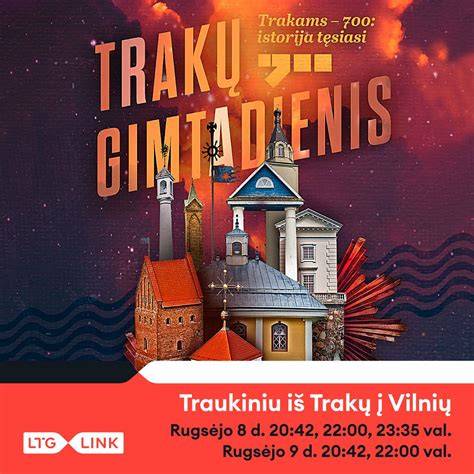
Kodinis aiškinimas ir 2025 m. pasiekimai
With 7.4 million passengers served in 2025, it is the third busiest airport in Poland in terms of passenger traffic, behind Warsaw Chopin Airport and Kraków John Paul II International Airport.
Laiko įvykių apibūdinimas
The first Polish route was served between Gdańsk, Warsaw and Lviv by Aerolloyd beginning in September 1922. The airport facilities became outdated at the end of the 1960s, prompting a relocation near the village of Rębiechowo. The airport opened in 1974 near Rębiechowo. The airport acquired its current name in 2004.
Techniniai duomenys ir paruošimas
The runway is equipped with an ILS CAT IIIb enabling landings in foggy weather. The decision height established for the approach system in Gdańsk is 30 m, with visibility minimums from 125 m to 300 m, depending on runway length segment. The LED-based lighting system supports remote control from the control tower. The airport operates nine jet bridges.