Damien Hirst, the father of the young British artist, after years puts himself out there with this giant exhibition completely changing himself and his work. There are no provocations, animals, drugs, colored dots. In this sense, the bet is high, because it takes the scene abandoning what made him famous, refusing to repeat itself, if not for the wealth. The story is simple: in 2008 it was discovered that the wreck of a ship sank off the east coast of Africa, belonged to Cif Amotan II, a freedman of Antioch who lived between I and II century AD. He freed himself from slavery and gathered an immense fortune among art works, jewelry, antiques, and spoils of war. This treasure was loaded onto his ship to be brought to a temple, but it never arrived at its destination. Then the recent discovery, the re-emergence of encrusted artifacts from the sea, sometimes very damaged. That this story is a complete fabrication is unimportant. So triune works: sculptures rebuilt as new, falsely sculptures subjected to spend time on the seabed, video or picture of their recovery. Here, size matters: from tiny gold sculptures to the 18 meters of the giant’s height that fills the courtyard of Palazzo Grassi (Demon with Bowl). The challenge is to create, provide the public with a story, a fairy tale. Herein will lie the success or failure of this exhibition. Beyond the technical expertise, the cost of production of this enormity similar to a collection, the impression that is created is truly to enter in a strange archaeological museum. And this also serves the ornaments, such as the caskets with the collections of fake rare shells, which are a fall in the tension of the exhibition. They certainly will not be sold at a high price, but they offset, creating the image of the museum. The materials are conventional ones; the works have an aspect that can be ambiguously connected to experiences already lived. We are surprised for the size of the caskets, in a much elaborated fictional language that makes this surplus of fantastic syncretism, between myth and cartoon, surrealism and jewel, gods and monsters in a credible collection of the wonders of an invented world. The fairy tales, the stories, at the dawn of humanity was needed to recognize, ritualize and defeat the real and imaginary dangers, to reconnect with nature.
Even with the advent of the novel, the narrative has maintained, according W.Benjamin, its function: “on the one hand the meaning of life, the other the moral of the story”. Damien offers this in the exhibition, a fairy tale and a game, that ridiscute a large part of contemporary art that instead brings to the concept, to the minimalism of the artistic gesture and of the space that contains it. Here is the provocation of the treasures from the wreck of the unbelievable, the real controversial point and the novelty. Stories and tales feed our mind and soul as food nourish our body. In this era of quickness, multiple images, videos and indifference, are will still able to stop for a while and pay attention to a story? I surely am, and that’s why I enjoyed my experience at Damien Hirst exhibition in Venice: Treasures from the Wreck of the Unbelievable.
Damien Hirst is a British artist, well known for his provocative installations. I don’t know if you remember the shark or the disturbing cow… I didn’t particularly like those installations per se, but I reckon the ideas were brilliant. And he is also a sharp business man. The first part is at Punta della Dogana (vaporetto n. 5.1 at the Train Station, off at Spirito Santo + 5 minutes walking). The Dogana is the white building that once hosted Venice’s customs. You probably know the triangular white building located where the Grand Canal merges with St. Mark’s Basin. You surely saw at least once the shiny statue representing the Fortune on a Golden Ball (aka World), supported by two Atlases. Well, there is the location of the first half of Hirst’s exibition (entrance next to the Salute Church). The second part is at Palazzo Grassi (15 minutes walk crossing the Canal Grande at the Accademia Bridge). The Palazzo, very sober, dates back to 1700s and overlooks the Grand Canal. Did you know that… Precisely at Palazzo Grassi Salma Hayek met Pinault’s son. This new story begins with a former slave called Cif Amotan. He got rich, who knows how. And he collected a lot of precious statues from different ages and civilizations. At some point he decided to sail to the East to build a temple for the Sun God. All the treasures stand under the water for ages. The lovely Giulia, tour guide, invited me to join one of her visits. If you expect a thorough review, I won’t do it. I don’t want to make spoilers because I believe in judging art without prejudices. But let me tell you something: if you’re “eminently practical” (Hard Times) this is probably not your thing. Moreover the works and the Venice locations are a perfect match.
The giant statues of seducing beauty at the beginning of the mostra (Italian for exhibit), the vivid colours of the corals, the surreal atmosphere, the constant invite to reflect created a bizarre and unique opus. I really liked it. And the photos of the retrieval? Amazing. Some pieces are breathtaking like the giant statue at Palazzo Grassi (inspired by William Blake’s Ghost of a Flea), others are more intimate like the tiny golden monkey. Others evocative like the jade Medusa (whose blood created coral, did you know?), or provocative like the Amazon and the Bear. So is the story actually unbelievable? I think this “show” is well worth the 10 years the artist spent in creating it, and surely worth a visit.
As an artist you’re looking for universal triggers. You want it both ways. You want it to have an immediate impact, and you want it to have deep meanings as well. I’m striving for both. But I hate it when people write things that sound like they’ve swallowed a f… dictionary. Death is a central theme in Hirst's works. He became famous for a series of artworks in which dead animals (including a shark, a sheep, a pig, and a cow) are preserved, sometimes having been dissected, in formaldehyde. Since 1999, Hirst's works have been challenged and contested as plagiarised 16 times.
Hirst was born Damien Steven Brennan in Bristol and grew up in Leeds with his Irish mother who worked for the Citizens Advice Bureau. He never met his father; his mother married his stepfather when Hirst was two, and the couple divorced 10 years later. His mother stated that she lost control of his son when he was young; he was arrested on two occasions for shoplifting. Hirst sees her as someone who would not tolerate rebellion: she cut up his bondage trousers and heated one of his Sex Pistols vinyl records on the cooker to turn it into a fruit bowl. He worked for two years on London building sites, then studied Fine Art at Goldsmiths College (1986-89).
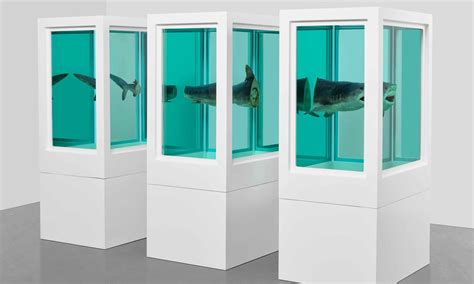
The following decades are marked by pivotal moments, including the 1992 Young British Artists showcase, the famous shark piece The Physical Impossibility of Death in the Mind of Someone Living, and major international presentations. In 2007 he created For the Love of God, a life-sized platinum skull adorned with diamonds, a centerpiece of his provocative career. In 2017, Hirst presented Treasures from the Wreck of the Unbelievable in Venice, a ten-year project that blends fact and fiction, archaeology and contemporary art, split between Punta della Dogana and Palazzo Grassi. The exhibition is described by many as a showroom for oligarchs, though it remains a landmark for its audacious scale and narrative ambition.
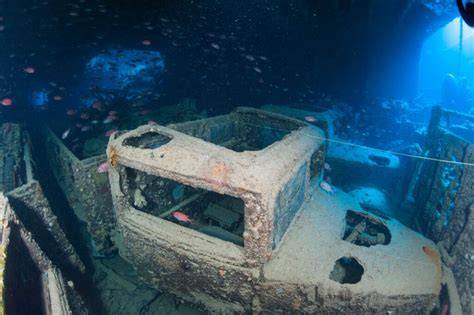
The Venice show is accompanied by a substantial production, including large-scale bronzes, coral-encrusted sculptures, and documentary materials. Critics discuss the economic dimensions, publishing, and potential market manipulation, while others are drawn to the spectacle, architecture of the venues, and the theatrical blending of ancient relics with modern sculpture. The scene in Venice, with its two connected venues, demonstrates how art, commerce, and myth can intertwine to create a controversial and unforgettable experience.
60th Venice Biennale: part 1, walk-through of the central pavilion and country pavilions...
Damien Hirst’s Treasures from the Wreck of the Unbelievable remains a controversial exploration of collecting, value, and storytelling in contemporary art, inviting viewers to question what is considered authentic relic and what is spectacle in the modern museum economy.